Foreword
Once upon a time, the computer experience was small, quiet, and straightforward, even though the computer itself was big, loud, and clunky. There was no hard drive, it could only do one thing at a time, and there certainly wasn't any internet to be distracted by. The computer lived in one particular room and was shared by your whole family. You turned it on to do a particular task, you did that task, and you turned it off when you were done.
On these computers, games were also usually small, self-contained, straightforward games of reflex and repetition, with levels that mostly fit on a single screen. Boulder Dash, Summer Games, and Spy Hunter were quite popular on the Commodore 64 in 1984.
And yet, there were a few games that really expanded what a computer game could be. Both Ultima III: Exodus (1983) and King's Quest (1984) have an open world to explore, characters to interact with, and a story that the player participates in. Gamers loved these games, and they each became one of the most successful game series of the '80s and '90s.
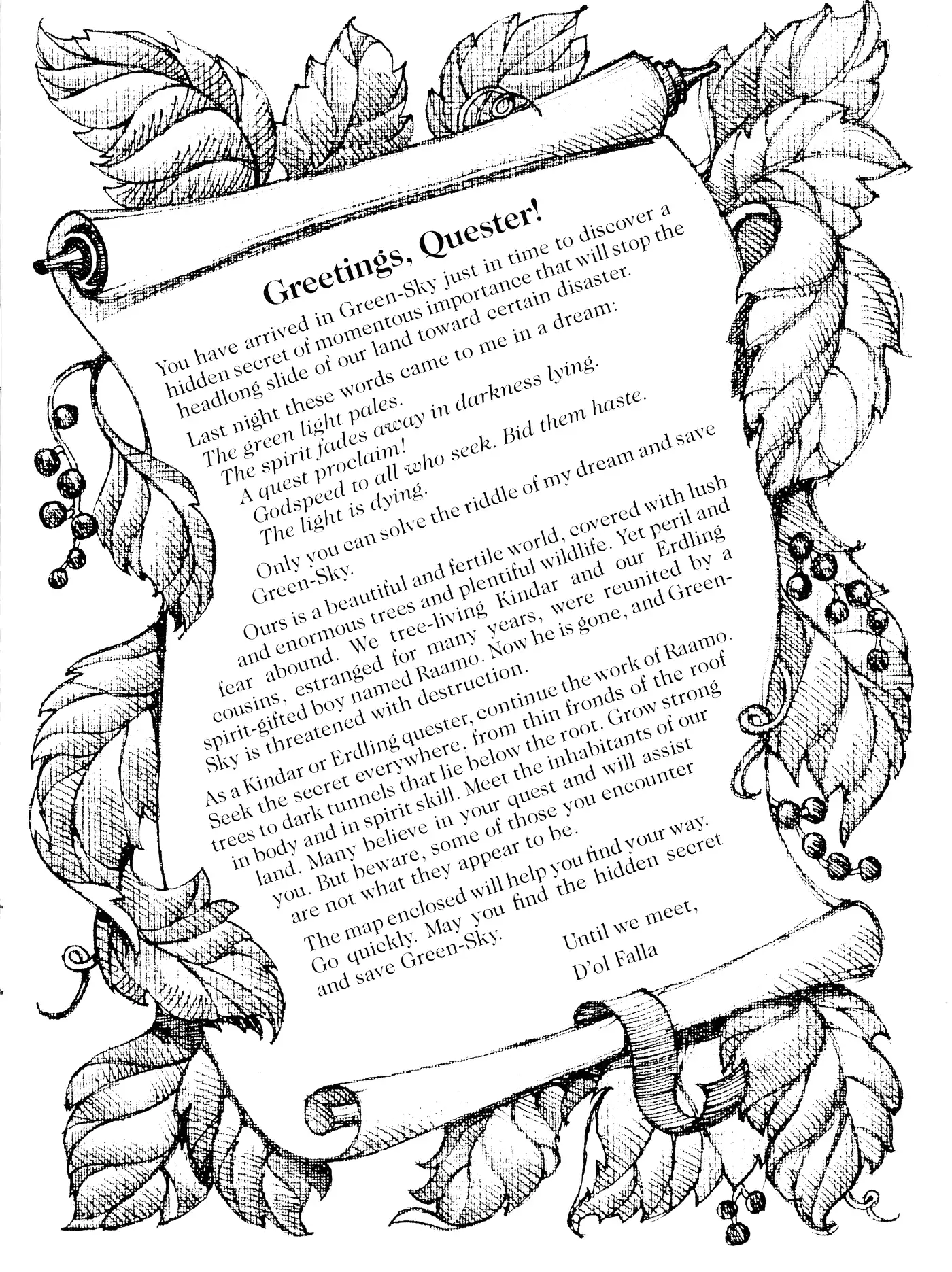
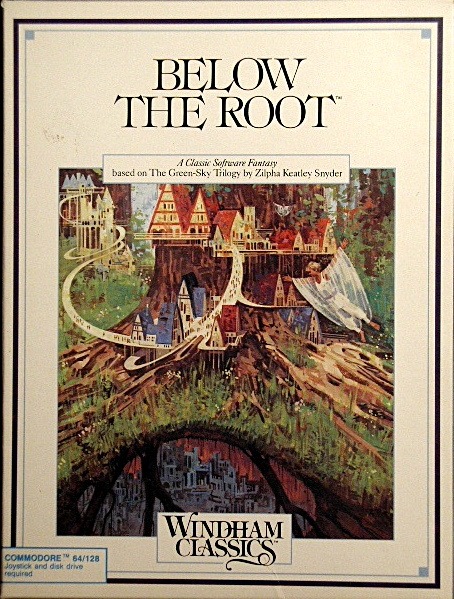
But there's another excellent game from that era that most gamers don't know about. Below The Root was developed in collaboration with the author of a fantasy/sci-fi trilogy over about 4 months, and published at the end of 1984 by Windham Classics as a children's adventure game. It's a sequel to the trilogy, in which you have to save the main character (who dies in the books, an ending the author regretted).
This game had a real impact on me as a kid. I had played some interactive fiction like the Scott Adams' adventure games, but I could never make much progress in "real" adventure games like Zork or Hitchhiker's Guide. But like those games, Below The Root had plot and puzzles and characters with feelings.
In fact I remember learning the word "avarice" from it: some characters will kidnap you in certain circumstances, and if you 'pense' (sense the emotions/thoughts of) characters, they can clue you into whether they are going to be helpful or hurtful. There are very few words in Below The Root, so they all carry more meaning.
Below The Root has a warm and simple aesthetic that gives the world a visual flavor and kept me engaged. It rewarded patience, curiosity, and a bit of cleverness. And it's fun to glide from screen to screen to explore the world!
I'd like to encourage you to take some time now to play the game and explore for yourself. I've made it very easy here so you can take a trip back in time to a finished basement rec room that has the Commodore 64 in it. Consider how you might have received this game in a sealed box, and opened the inside flap. Maybe you leafed through the manual while you waited for the game to load. Take your time, the game may be simple but it has depth.
This Port
Welcome back, I hope you enjoyed that detour down memory lane!
I played this game obsessively around 1985-1986, then again in 2012 during a particularly stressful time. I didn't know about the books as a kid, but I finally got around to reading Zilpha Keatley Snyder's Green-Sky trilogy (Below the Root, And All Between, and Until the Celebration) in 2018. I was amazed at how well the game had captured the experience of being in the world of Green-Sky: the shubas for gliding, the nids for sleeping, the nonviolent "utopia" that the plot is based around, and how the various spirit skills are integral to both the plot of the books and the puzzles in the game!
This is the second time I've been motivated to restore this game from the C64 edition (the original one) for posterity. I spent about 4 months in 2013 when I first created the Century Arcade, and made a bootable ISO with a C64 emulation and a hacked version of the game. It worked, but it was janky: the sound stuttered, and it required a VM. Still, it was easier than setting up an emulator yourself and swapping disks as you ventured into different areas. Shortly thereafter the Internet Archive released the web-emulation version for a huge collection of PC games, so now you could play (a much worse version) of Below The Root online, easier than the option I'd been working on. I made a beta release of my version but otherwise basically shelved it.
Fast forward to 2026, and I decided to use modern tools to complete my dream of preserving this game for posterity. I have produced a complete port of the entire game to the modern web, so now you can play the highest-quality version of this game online! I've played it through multiple times on several different platforms. After some tweaking, the controls feel solid (even on mobile), and I've made sure the game is winnable with all 5 characters.
I've added several quality-of-life improvements, like auto-saving your game every screen, a permanent status indicator, and the map filling in as you explore. I've put at least a hundred hours of attention and care into this project, to make this into a delightful experience of a work of art that has meant a lot to me over the years. Preservation and low-key educational toys are both long-time interests of mine, and this project combines them into one glorious restoration.
If you enjoyed this journey down memory lane, I'd love if you checked out my other work. Please reach out if any of it resonates with you!
-- Saul Pwanson (Curator, Century Arcade)
External Articles
- Compute! magazine review (1985, Nick Piazatta Jr)
- Digital Future, Invisible Past : What Lives On When A Good Game Dies? (2014, Darby McDevitt)
- Below the Root: A story, a computer game and my lifelong obsession (2015, Justin Stahlman)
- Below The Root digital album (2017, Altus)
- The Making Of Below The Root (2024, John Szczepaniak)